Learn Japanese from real conversations, not just textbooks
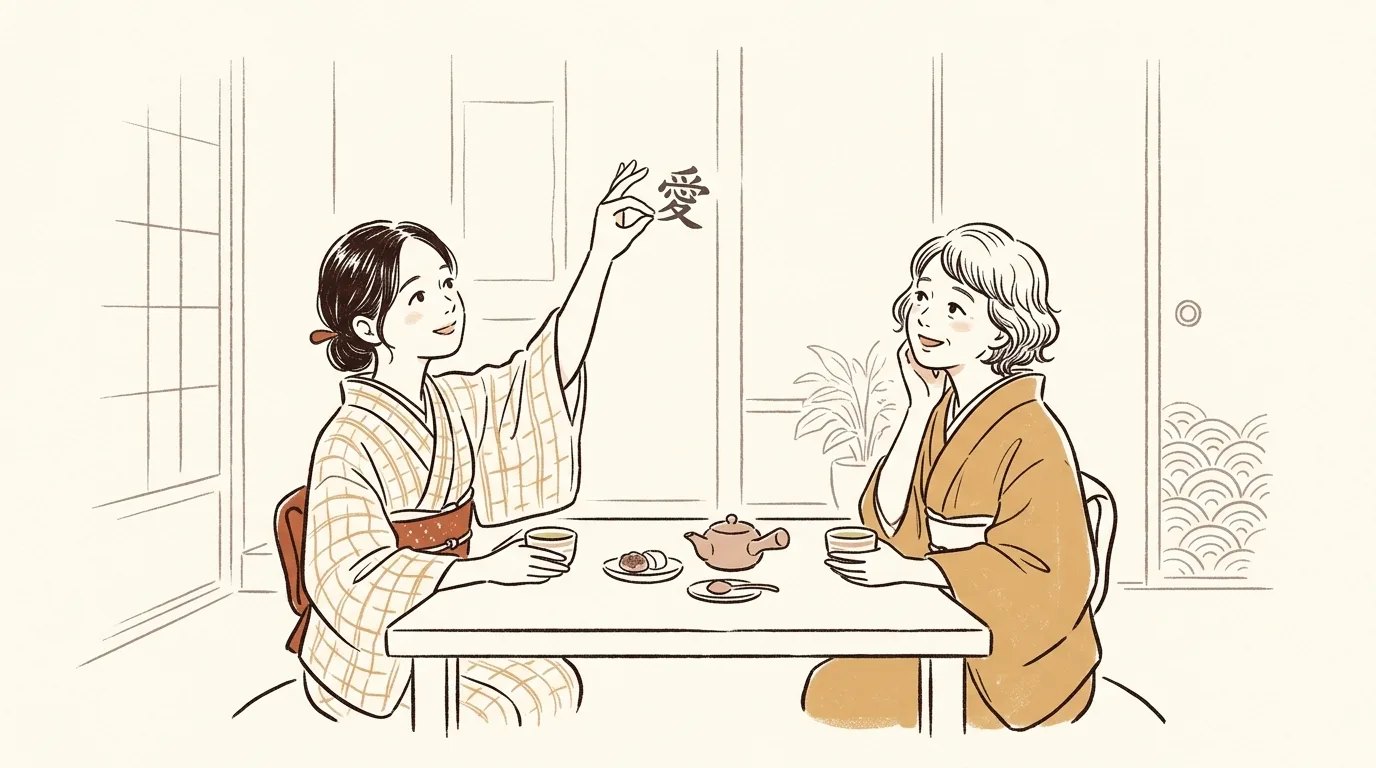
You finished the textbook, drilled the JLPT vocabulary, and can parse the grammar — and then a casual conversation washes right over you. If you're trying to learn Japanese from conversations and it isn't sticking, the problem usually isn't effort. Textbook Japanese and the Japanese people actually speak are, quietly, two different languages.
You know the words. But in real speech they get shortened, blurred, and buried in filler, and by the time you've decoded one, the sentence has moved on. The harder you studied at a desk, the more jarring the wall feels: fine on paper, lost out loud.
I spent six months building Hiroi, a solo iOS app that fuses live translation with learning, and this is the exact gap I kept circling. So before any pitch, here's a practical way to turn real spoken Japanese into your own study material.
Why textbook Japanese and real spoken Japanese are so different
A textbook always shows you a word in its Sunday best. In real conversation, that neat form erodes.
- It shrinks. している becomes してる, てしまう becomes ちゃう, なければ becomes なきゃ. Wait for the citation form and you'll miss the contracted one.
- It gets buried. The one word that matters slips past inside filler — えーと, なんか, やっぱり.
- Keigo is alive and moving. お疲れさまです and ご確認いただけますか are one tidy line on the page, but they arrive fast and clipped in the room.
So the textbook isn't wrong; it only teaches the clean base form. Conversation contracts that form, drops it, and buries it. That's why someone who scores full marks on paper still gets left behind out loud. It's a problem of order, not of talent.
Why passive immersion alone doesn't stick
"Then just soak in a lot of it" — anime, dramas, podcasts. This is Japanese immersion, or comprehensible input, and the direction is right. But if you only let it wash over you, surprisingly little stays.
The reason is simple: the moment subtitles or a rough gist let you feel "I got that," your brain stops reaching for new words. The comfort of understanding is what ends the learning. Hours of input just skate over the words you already know, and the genuinely new one slides past.
Input that works needs only two things. One, a little above your current level is mixed in. Two, you notice that slightly-harder word, catch it, and recall it later. Not the volume you soak in — whether there's one word you noticed and kept. Immersion isn't wrong; it's half. Add the other half — notice, keep a few — and the whole scene changes.
How to learn Japanese from conversations, a few words at a time
So how do you keep them? The trick is not to be greedy.
From one episode, one chat, one meeting, two or three words is plenty. The moment you try to transcribe everything, it becomes a chore and it doesn't last. Just two criteria for choosing: "am I likely to meet it again?" and "will it help future me?" In your favorite show, your workplace, your friend's verbal tics, that word will come back. Learn the words you'll actually use — that's the most efficient order there is, and the sanest way to remember Japanese words.
Then the handful you caught, you recall once, right as you're about to forget. Spaced repetition does that timing for you automatically; I wrote up how it works in learning words from conversations. The point here isn't more desk time — it's taking the few words you caught from real speech and hitting each one once, just before it slips. That alone makes listening practice stick far better than volume ever did.
The payoff: meeting the word again in the wild
The best reward of this method arrives much later.
You caught 手加減 in an anime and reviewed it twice. Weeks on, a colleague says "手加減してよ" — go easy on me — and in that instant, "oh, I know that." A word that was a lone dot joins into a line. That reunion rarely happens with textbook vocabulary; with words caught from conversation it happens all the time, because what you caught is a word that circles back through your own life.
Missed it → catch it → learn it → meet it again live. Once that loop turns, anime, small talk, and meetings all become your personal textbook. The word you didn't understand today is, by the next time you meet it, already yours. It looks like the long way around. It's the surest shortcut there is.
Hiroi folds that whole loop into one flow
You can do all of the above with a notebook and an off-the-shelf spaced-repetition app. The trouble is following a conversation, then later picking a few words, making review cards, and noticing the reunion — doing that across separate tools rarely lasts. Hiroi folds it into one flow.
- In the moment: live captions for Japanese, English, and Chinese — streaming as people speak, so the word that eroded past your ears, your eyes can still catch.
- Catch: save a word you want to keep with one tap.
- Learn: saved words go into an FSRS deck; review arrives right before you'd forget.
- Meet again: when a learned word resurfaces in real life, the app quietly tells you.
It never records audio. Transcripts and your deck stay on your device. No subscription — the first hour is free, then it's prepaid time packs (from ¥600) that never expire. From the words you caught that day, one hand-drawn card is made: not a score, just a small keepsake of the words you met today.
Translation itself keeps getting cheaper and freer. Even so, I think what remains is the learning. If you'd rather learn Japanese from conversations than only from textbooks, take a look at hiroi.app.
May the word you catch today keep until you meet it again — and, one day, turn out to be yours.