Killing the feature I spent the most time on — a solo dev's hardest cut
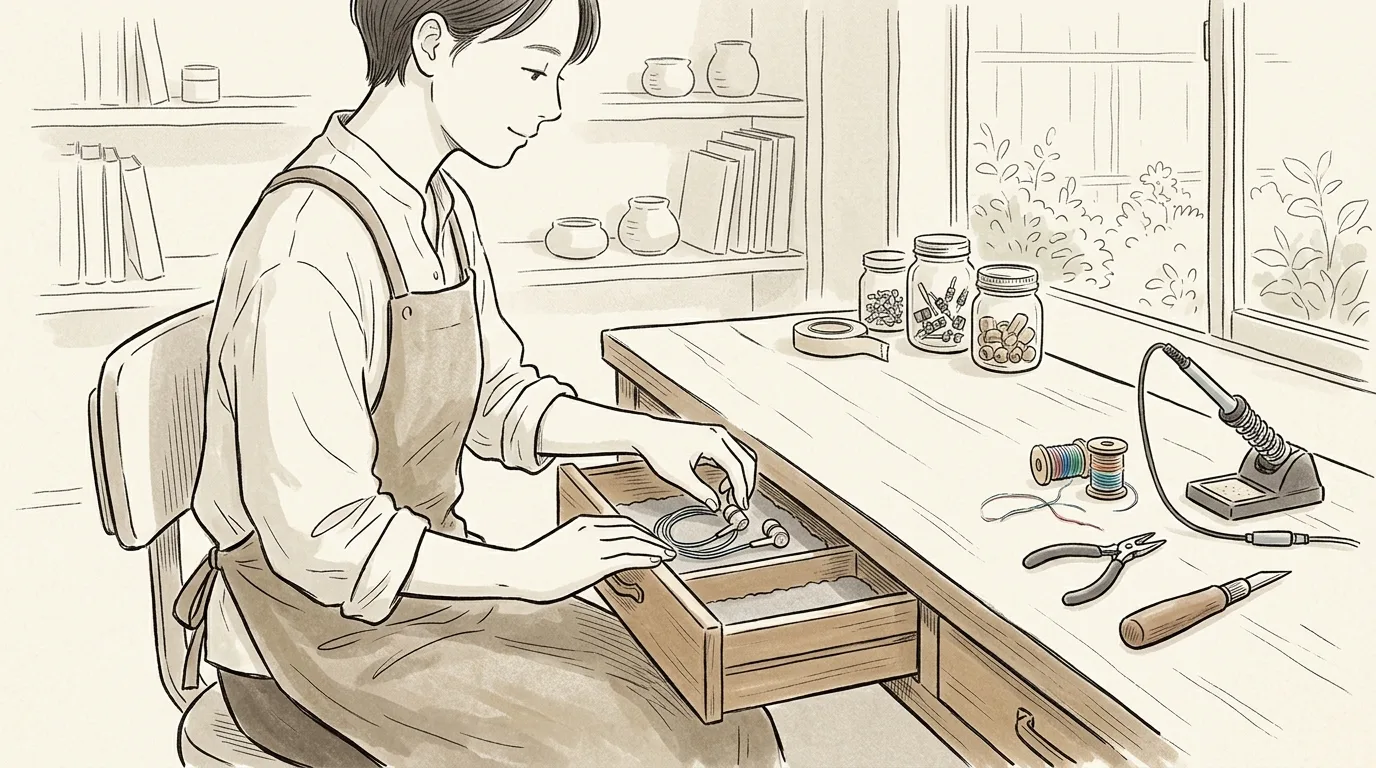
Killing the feature I spent the most time on was, by a wide margin, the hardest decision of the whole project — precisely because it was the piece I was proudest of.
On 2026-06-13 I removed the voice "Interpreter Mode" from Hiroi, my solo iOS meeting translator. It would translate the other person's speech and speak it into your earphones — like having a live interpreter sitting beside you. Across six months of building, no feature took more of my hours than this one. And I deleted it myself.
Here's that decision, told as honestly as I can — in case it's useful to anyone else building a product alone.
What the feature was
Interpreter Mode was Hiroi's original headline act.
Someone speaks Japanese. The app translates it. A synthesized voice whispers the English into your ear — and the reverse, too. In theory, a personal simultaneous interpreter, hired by the earbud. The demo looked like magic, and I genuinely believed it was the reason people would choose Hiroi.
So it got the most care. Latency, voice quality, interruption timing, keeping the spoken output from colliding with your own listening — I polished those details for weeks. In terms of sheer attachment, it was the feature.
Why I killed it — three honest reasons
I still cut it, for three reasons. Each was a little painful to admit.
1. It got commoditized. While I was building, Apple and Google started shipping the exact same thing — live spoken translation — at the OS level. Their move was reasonable, and honestly a bit validating: it meant the direction was right. But you can't make a free, built-in OS capability the reason to choose a solo-built app. It had stopped being a battleground I could win.
2. It was actively hurting the core. This one stung the most. The spoken output was quietly fighting the live captions. While the voice was talking, the on-screen transcript stumbled, lagged, and split the user's attention between listening and reading. My flagship feature was undermining the experience that actually mattered — captions you can follow with your eyes.
3. It was the biggest cost and complexity sink. Voice interpretation was also the app's deepest well of technical debt. The processing, the bills, the richest source of bugs — all concentrated here. One feature was making the entire product heavier.
What the cut clarified
The day I pushed delete, something strange happened: I could finally describe Hiroi in one sentence.
Translate, and learn. That's it.
With the voice branch pruned, the trunk showed through. Hiroi's real differentiation was never the interpreter's voice — it was the loop: catch → learn → meet again. Catch a word that slipped past you in a meeting, learn it with spaced repetition, and run into it again next time — "oh, that's the one I studied." Nobody fills that gap for free. That's where a small app can actually win.
Had I kept the voice, I'd have gone on spending my hours tidying a battlefield I couldn't win.
Subtraction is a skill
What I took from this: subtraction is a harder skill than addition. Building a product looks like adding things; in practice it was a long series of solo-dev decisions about what to remove.
Sunk cost isn't a concept from a book; it aches in your chest. The more time you poured in, the more sure you were, the harder it is to let go. But the test turned out to be simple — if a feature isn't a reason to choose you, it's a reason to lose focus.
The day I deleted my best-crafted work was the most productive day in those six months. I didn't write a single new line.
If there's a feature you're agonizing over right now, ask it one question: is this a reason someone chooses the app? If it isn't, it may just be blurring your focus. (I traced more of that reasoning in why meetings are so hard to follow and what remains when translation is free.)
What Hiroi is now
Today Hiroi does something simple. It puts live captions for Japanese, English, and Chinese on screen as people speak, lets you catch the words worth keeping, and teaches them back with spaced repetition. It doesn't interpret out loud — and because of that, the captions are faster, quieter, and surer of themselves.
It never records audio. Transcripts and your deck stay on your device. No subscription — the first hour is free, then prepaid time packs, only for what you use. Solo-built, Japan-first.
If you'd like a look, it's at hiroi.app, and on X at @hiroi_app.
Killing the feature I spent the most time on turned out to be the day Hiroi got lighter. Cutting, it seems, is part of building.